
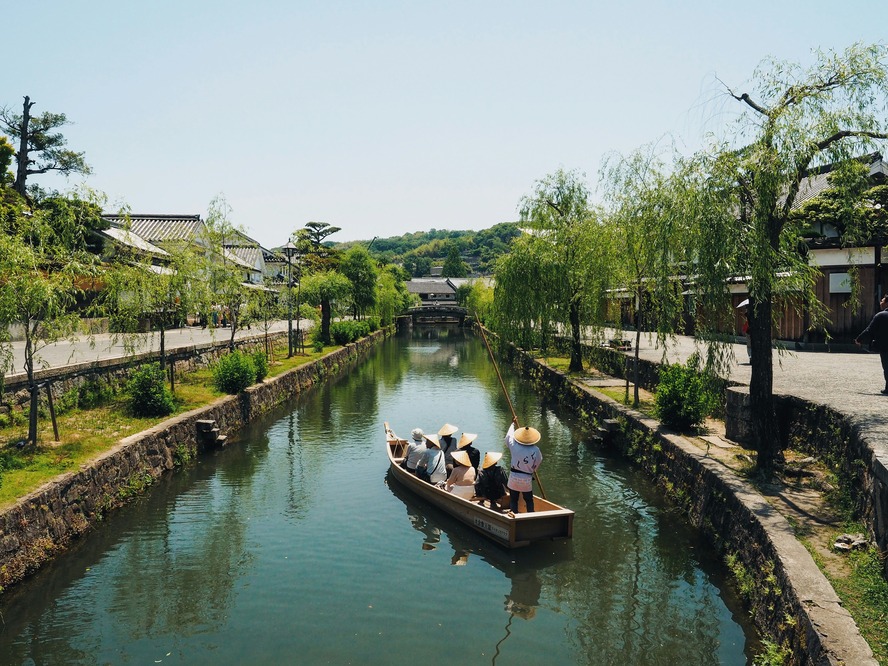
倉敷- Kurashiki
We took the bullet train from Hiroshima to Okayama, then decided to take the local JR train to Kurashiki, one of western Japan’s most charming towns. What we found was a historic quarter that has beautifully maintained its Edo-era (1603–1867) aesthetic within the Bikan Historical Quarter, some of Japan’s best denim shops, and two fantastic art museums: one featuring works by world-renowned artists such as El Greco, Picasso and Monet, and another dedicated to ukiyo-e artist Kuniyoshi. If you love art, denim, or simply want to experience the atmosphere of an 19th-century Japanese town, Kurashiki is definitely worth a visit. There are also plenty of cafés, shops, and great places to eat, making it an easy and enjoyable day trip.


How to Get to the Kurashiki Bikan Historical Quarter
We got to Kurashiki Station on a local JR train on the San’yō Main Line directly from Okayama Station. Just outside the south exit, we found a local department store located a few minutes’ walk from the station, offering cosmetics, regional souvenirs, local crafts, and a basement food market. From there, we walked down towards Kurashiki Ebisudori (Ebisu Shopping Street), a covered shopping street leading from the station towards the historic Bikan District.
As we continued walking through Ebisudori, occasionally peeking inside the myriad of shops selling everything from clothes and jewelry to toys and local food, we suddenly found ourselves at the entrance to the historic Bikan District. It felt as if we had walked straight from modern-day Japan into another era.
Entering the Edo Period
We walked for a while, simply exploring the initial parts of the Bikan Historical Quarter. We found all kinds of shops, cafes, restaurants, boutiques, and even residential dwellings, all housed in buildings and along streets that looked as though they had come straight out of the Edo period.
We came across stores offering denim and indigo goods, traditional folk crafts, and local handmade products. There was Bizen pottery, Kurashiki glass, and hand-woven rugs, along with preserved townhouses housing quiet galleries, antique shops, and local specialty sweet shops.
As we continued wandering through the streets, we suddenly found ourselves in an even more beautiful part of the district: the canal area.

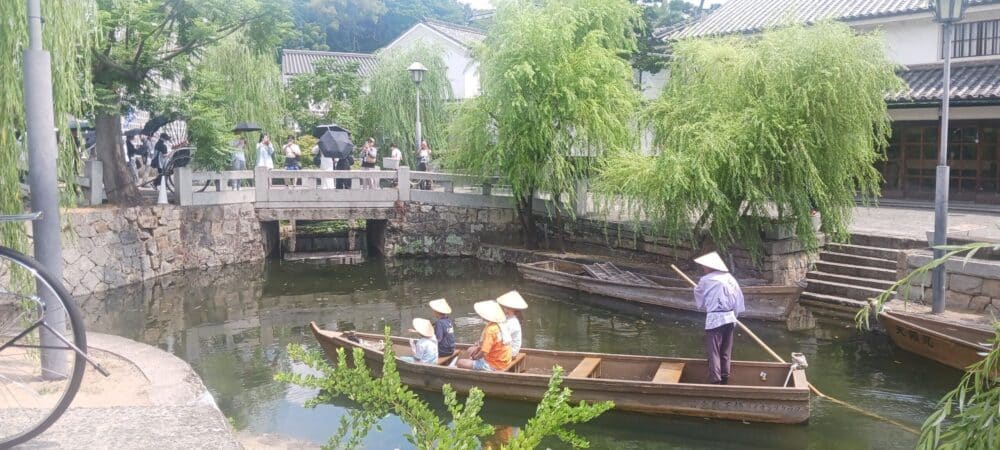


Explore the Bikan Canal District
As we reached the heart of the Bikan Historical Quarter, we found ourselves beside a lovely canal flowing through the middle of the old town. On either side were distinctive Kura warehouses with their massive white walls, beautiful willow trees lining the canal, and small bridges connecting the two sides. Small sightseeing boats were also making their way up and down the canal, carrying tourists through the historic district.
We learned that during the Edo period, Kurashiki developed into an important centre for trade and the storage of goods, particularly rice. The area’s distinctive white-walled Kura warehouses were designed to protect valuable goods from fire and remain one of the defining features of the town today.
Nowadays, instead of being used for storage, many of these old buildings have been given a new life, with shops, cafes, restaurants, galleries, and other local businesses now occupying the warehouses.
From Merchant Town to Modern Destination
At that point, we had a blast just exploring the odd little stores and craft shops scattered throughout the area. We visited the Museum of Folkcraft, the Momotaro Museum, and Kurashiki Ivy Square, a red-brick Meiji-era complex that once housed Japan’s first cotton mill and is now a popular tourist and cultural spot.
We also made our way down Kurashiki Denim Street and learned why Kurashiki is so famous for its denim. The nearby Kojima district is considered the birthplace of Japan’s domestic jeans industry, with a history built on centuries of local cotton farming and textile craftsmanship. Naturally, we couldn’t resist having a look at some of the denim shops along the way!
After wandering around for a while, we decided to buy tickets to the Ohara Museum of Art, whose impressive Western-style building immediately caught our attention. From the outside, it almost looked like an ancient Greek or Roman temple sitting in the middle of the historic district…


Visit the Ohara Museum of Art
We discovered that Kurashiki is actually a great place for art lovers. We entered the Ohara Museum of Art (established in 1930 as Japan’s first museum dedicated to Western art). We had a great time looking through its collection, which included works by artists that even I, an uncultured bumpkin, had heard of, including El Greco, Claude Monet, Paul Gauguin, Henri Matisse, Auguste Rodin, Giovanni Segantini, and Pablo Picasso!
It was great fun, and a completely unexpected surprise to find such an impressive collection of Western art right in the middle of an old Edo-period town. After the museum, we were getting hungry, so we ducked into a local ramen restaurant and ordered some delicious food!
By then, we were running out of time, so we made our way back towards Kurashiki Station and eventually headed home. It was a pretty packed day, but we had a fantastic time exploring Kurashiki!
Is Kurashiki Worth Visiting?
Absolutely. Kurashiki is particularly worthwhile if you’re interested in Japanese history, traditional architecture, art, shopping, or simply want to experience a quieter side of Japan away from the country’s biggest cities. We found that the best way to enjoy it was to take our time—wander along the canal, duck into interesting shops and galleries, cross the little bridges, and explore some of the quieter streets away from the main tourist areas.
For travellers exploring Okayama Prefecture, Kurashiki makes for an easy and rewarding day trip, with a completely different atmosphere from the larger cities nearby. There’s something special about being able to wander through an old merchant town, surrounded by centuries-old buildings, while still finding plenty of cafes, shops, museums, and places to stop and enjoy yourself.
If you’re looking for somewhere that combines history, culture, art, and old-world charm without feeling overwhelmingly busy, Kurashiki is well worth adding to your Japan itinerary. Take a slow walk through the Bikan Historical Quarter, follow the Kurashiki River, and see where the streets lead—you might find, as we did, that simply wandering around is half the fun.

